
Thyatira: work, faith and a living town
A letter praises love and service in Thyatira. In Akhisar, a short archaeological walk opens a careful conversation about work, community and the many centuries between text and stone.
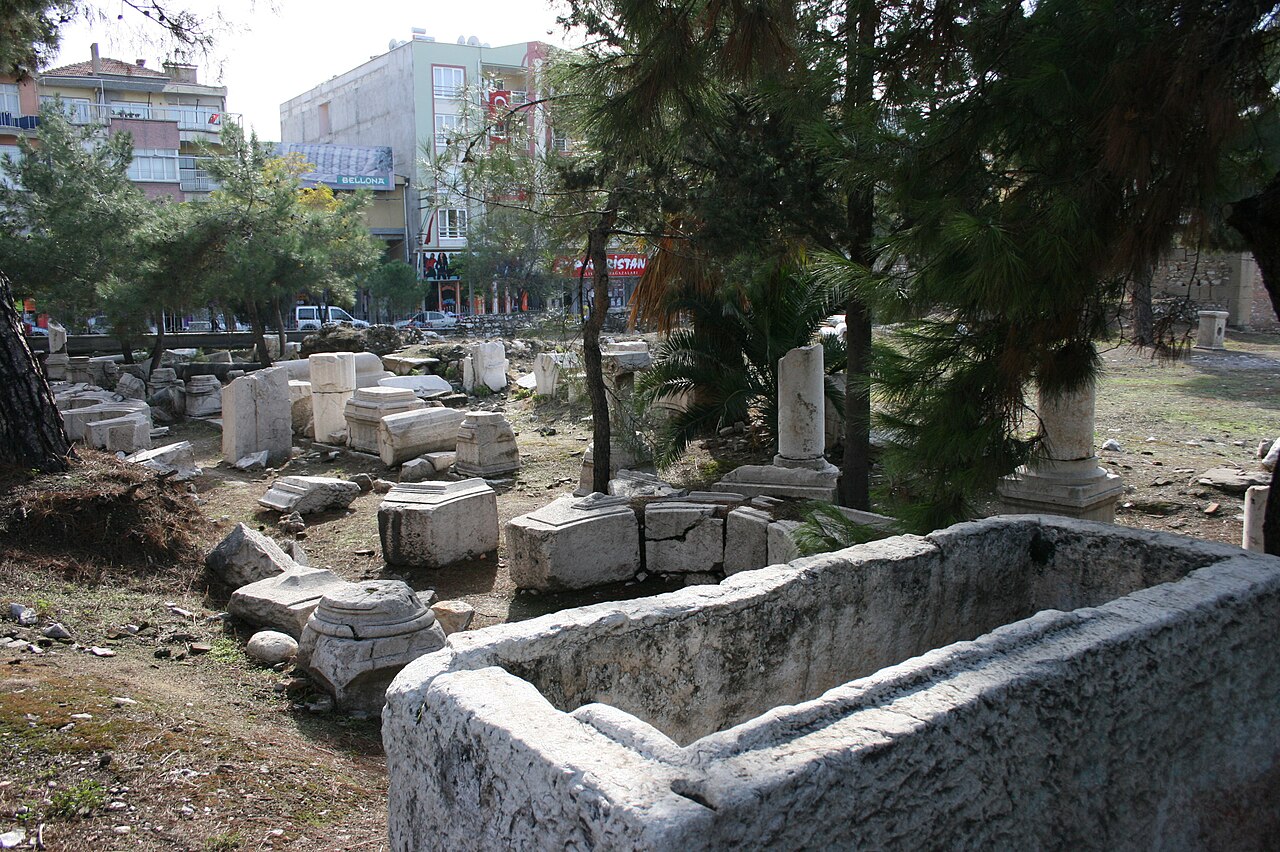
A town within the route
The journey to Thyatira leads into present-day Akhisar, rather than to a remote field of ruins. Streets, businesses and homes occupy the area of the ancient settlement. Tepe Mezarlığı, a small archaeological site in the town centre, gives visitors a place to stop and read, but it cannot hold the whole history of the city in one enclosure. It asks us to imagine a community of neighbours and workers, not merely a line of monuments. The ancient name belongs to one of the seven congregations addressed in Revelation; the town that surrounds the remains belongs to people living here now. A thoughtful visit makes room for both.
What the letter actually says
Revelation 2:18–29 addresses the church in Thyatira in vivid visionary language. It begins with an image of the Son of God and commends works, love, faith, service and endurance. It even says that the community's later works exceed its earlier ones. The message then criticises a teacher whom it calls Jezebel and disputes teaching connected with sexual immorality and food offered to idols. Those are the text's claims in a contested religious setting, not a licence to invent a biography for a woman whose identity the passage does not establish. The passage closes with a call to hold fast and a promise to those who persevere.
Reading the praise before the warning matters. It lets visitors hear a community recognised for care and perseverance, rather than reducing its entire life to a controversy. The letter supplies no street address, congregation size, occupational register or description of a church building. Its purpose is moral and pastoral. At the site, we can ask how its themes of work and loyalty might have sounded in a working town, while remembering that the answer is an interpretation, not a fact recovered by excavation.
Lydia offers another doorway
Acts 16:14 introduces Lydia as a dealer in purple cloth from Thyatira. The scene occurs in Philippi, across the Aegean, where she listens to Paul and later offers hospitality to his companions. That short notice gives the city a human connection to trade and movement. It does not say that Lydia founded the congregation in Thyatira or that her house was here. A tour can place Acts beside Revelation without joining their separate episodes into a single undocumented story. One passage follows a named businesswoman abroad; the other addresses a community in her city of origin. Together they prompt questions about travel, commerce and belonging, while leaving many details unknown.
The crossroads and the craft
The Manisa provincial culture directorate describes ancient Thyateira as a textile centre at a junction of routes linking regional centres. Its strategic position helped make it important for both commerce and military movement. The official description offers a grounded context for thinking about the working world behind the biblical references. Yet a general account of textile production cannot prove the profession of every believer in the letter. Nor can the mention of Lydia establish a direct link between her trade and a particular workshop exposed in Akhisar. These limits make the story more precise. Visitors can picture a connected town, while a guide keeps the difference between a plausible setting and documented personal history clear.
What the stones can and cannot date
At Tepe Mezarlığı, the provincial directorate reports a Roman colonnaded street, architectural pieces and coins. The Ministry's fuller account dates the excavated portico to the second through fourth centuries and an apsidal structure to the fifth or sixth centuries. These remains are important witnesses to the city's long life, but they are later than the usual first-century setting of the Revelation letter. A street can suggest the public scale of Roman Thyateira without becoming the exact path walked by its earliest Christians. It protects the site from a dramatic but misleading claim that every visible column stood before the people who first heard the letter.
The building called a basilica
The Ministry describes the apsidal structure at Tepe Mezarlığı as a basilica thought to have had a non-religious function. This is an especially useful detail for Christian heritage travellers. The shape and the name may call a church to mind, but the published interpretation does not identify it as the congregation's sanctuary. It is also dated several centuries after Revelation. A responsible itinerary can still pause there: ask why a term used for various Roman public buildings later became familiar in Christian architecture, and why appearance alone cannot settle function. Such questions turn a small site into a place for careful observation rather than a stage set for certainty.
Later faith and layered memory
Christian life did not stop with the biblical letter. The history of the wider town includes later buildings and changing religious communities. The Ministry notes architectural evidence that Akhisar's Ulu Mosque had an earlier history involving a pagan temple and later Christian use before conversion to a mosque in the fifteenth century; it also says the original construction date is uncertain. This is a later, separate chapter, not evidence for the first-century congregation's meeting place. On a group journey, clearly naming what belongs to Scripture, what excavation has dated and what later interpretation proposes helps every layer keep its integrity.
Making a meaningful stop
Begin with the whole passage in Revelation 2:18–29, giving time for its praise, challenge and promise. Read Acts 16:14–15 separately and notice where Lydia's story takes place. At Tepe Mezarlığı, look for the street and ask what their dates allow you to say. If the Akhisar Museum is part of your route, check current opening arrangements before travel; its displays offer broader local context, not a collection of objects certified as belonging to the biblical congregation. Thyatira rewards a slower stop precisely because the evidence is partial. The journey can be spiritually rich without pretending that a surviving stone answers every question the ancient texts leave open.