
Tarsus: Paul's birthplace and a later house of prayer
Acts names Tarsus as Paul's birthplace. The church now visited in the city tells a much later story of Christian remembrance, inviting travellers to distinguish text, place and tradition.
Begin with the name Tarsus
In Acts 22, Paul introduces himself to a crowd in Jerusalem as a Jew born in Tarsus in Cilicia and brought up in Jerusalem. The statement is brief, but it places his story across more than one city. A visitor to Tarsus can begin with that line instead of a supposed house or childhood street. The biblical text identifies a birthplace; it gives no address for the family's home. Modern Tarsus is a working city whose streets carry many later centuries. Moving through it with this distinction in mind makes the journey more honest and more interesting. We have a meaningful geographical connection without a map of Paul's early daily life.
A citizen of a city
Acts 21 records Paul describing himself as a Jew from Tarsus in Cilicia, a citizen of a city he considers significant. His words come while he is asking a Roman commander for permission to address a crowd. In the next chapter, the account also presents him as raised and educated in Jerusalem. Tarsus, then, is part of an identity shaped by movement, languages and communities, not a complete explanation of who he became. A route through Anatolia can use his self-description to discuss belonging and travel without turning the city into a simple origin myth. Even a small fragment of biography can lead to generous questions about home.
The journey from Tarsus to Antioch
Another passage offers a different scene. In Acts 11:25–26, Barnabas goes to Tarsus to look for Saul, finds him and brings him to Antioch. There they teach for a year among the community. The text links Tarsus to a turning point in their shared work, but it does not describe the building where Barnabas found him or the route they took out of town. Travellers can trace the larger geography of their story while resisting the temptation to assign a specific surviving wall to the encounter. The place matters because the text names it. The silence about a precise meeting point matters too.
A church from a later century
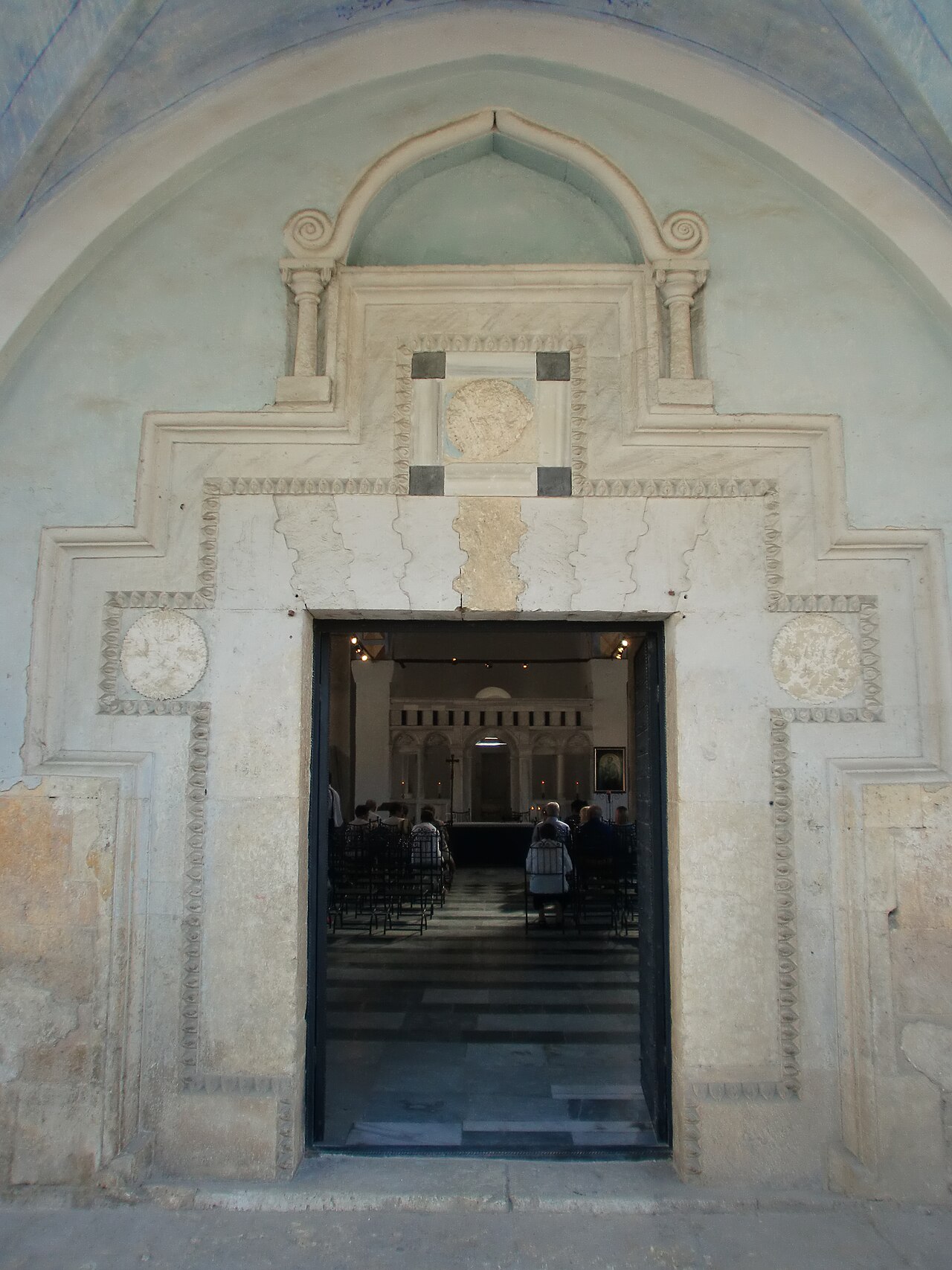
The church known today as St. Paul Memorial Museum stands in central Tarsus. The Türkiye Ministry of Culture and Tourism identifies the present building as a nineteenth-century church built by the Arab-Greek Orthodox community in 1850. The Mersin provincial directorate describes its later protection and restoration, completed in 2001, after which it opened as a memorial museum. These dates are essential to the visit. The building is a witness to Christians who remembered Paul many centuries after his life. Its name honours him, but its walls cannot be presented as the chapel he attended or the place where he preached. Later devotion is meaningful on its own terms.
Look closely at the building
The provincial directorate describes a rectangular plan, an entrance on the northern side, a vaulted porch carried by four columns and blue-painted vaults with stylised plant decoration. It also notes black and white marble flooring. These details invite a slower kind of observation. Rather than asking the building to reconstruct the first century, notice how a later community shaped a place for worship and memory. Its architecture and surfaces tell a story about the people who commissioned, used and preserved it. Those people are part of the Christian heritage of Anatolia too, even though they are separated from Paul by a long span of time.
Why the dates matter
A pilgrimage often brings together Scripture, archaeological remains and sacred memory. They are valuable sources, but they answer different questions. Acts can tell us that Paul called Tarsus his birthplace and that Barnabas sought him there. The memorial museum can show a later church associated with his name. Neither source gives us Paul's childhood house, and a modern visitor should not claim that the church proves the biblical events happened in its rooms. Explaining the gap between the first and nineteenth centuries does not weaken the experience. It gives travellers a clearer sense of how a community continued to remember an apostle across changing eras.
A living heritage, not a frozen scene
Tarsus is more than an episode in one person's biography. The provincial directorate notes that several churches dedicated to Paul were known there from accounts of travellers, while the present memorial is the one preserved. That is evidence for later Christian remembrance in the city, not a record of Paul's own congregation. The building's conversion to museum use adds another chapter of care and interpretation. It can be visited as a historic place, yet the town around it continues its ordinary life. A guide should speak of local residents and their city with the same attention given to biblical names and architectural features.
How to shape a thoughtful visit
Read Acts 22:3 and Acts 11:25–26 before entering the memorial museum. Invite the group to name what each passage says and what it leaves unsaid. At the church, observe the porch, decoration and floor as evidence of later Christian craftsmanship. Ask when the structure was built and what its preservation means today. If time allows, place Tarsus within the wider itinerary that also reaches Antioch and the cities associated with Paul's journeys. Check current museum access and group arrangements before travel, because opening conditions can change. Leave a few minutes for quiet reflection. The strongest connection between Tarsus and Paul does not depend on pretending that every stone is ancient: it begins with a text, a named city and the long history of people who kept his memory alive.
Sources & further reading
- Acts 22:1–21 · United States Conference of Catholic Bishops
- Acts 11:19–26 · United States Conference of Catholic Bishops
- Faith tourism in Tarsus · Mersin Provincial Directorate of Culture and Tourism
- St. Paul Memorial Museum · Türkiye Ministry of Culture and Tourism
- Acts 21:37–40 · United States Conference of Catholic Bishops