
Saint John's Basilica: a later chapter of Ephesus
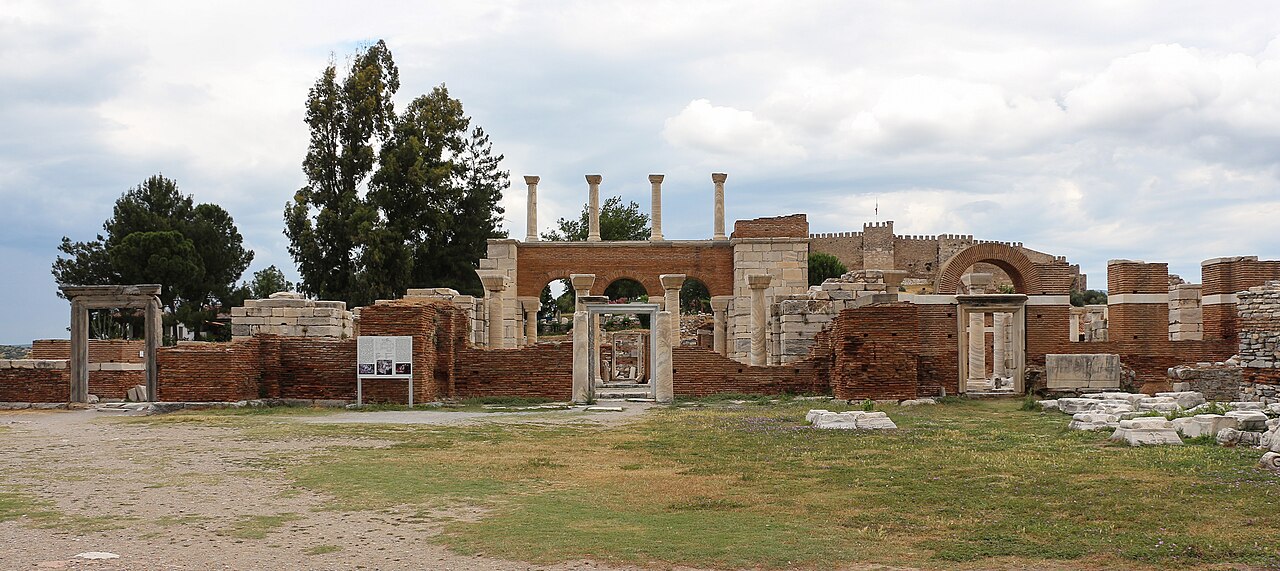
On Ayasuluk Hill, the remains of a great basilica show how later Christians remembered John in the Ephesus landscape.
Look beyond the Roman city
A journey to Ephesus often begins among the broad streets and impressive facades of the ancient city. Yet the Christian history of the region continues beyond those familiar views. Above modern Selçuk, Ayasuluk Hill holds the remains of the Basilica of Saint John. Its scale and setting invite a different question from the one asked in a Roman street: how did later communities remember the figures of the New Testament? Moving between the ancient city and the hill helps visitors see that Ephesus changed over centuries. The landscape was neither abandoned after the apostolic period nor preserved as a single moment in time. It developed new centres, buildings and forms of devotion that are worth seeing on their own terms.
What Acts actually says
Acts 19 describes Paul reaching Ephesus, meeting disciples, teaching in a synagogue and later holding discussions in a lecture hall. The chapter also portrays disagreement in the city around the worship of Artemis. Its focus is Paul's work and the varied responses of people around him. It does not describe a basilica on Ayasuluk Hill or identify a grave for John. That is a straightforward chronological point: the large structure visible today belongs to a much later chapter. Reading Acts before a visit can still orient the group to Ephesus as a place of early Christian encounter, provided the passage is not used as an architectural guide to the surviving basilica.
A grave remembered in tradition
The basilica bears John's name because Christian tradition associated a grave on Ayasuluk Hill with him. UNESCO's Ephesus nomination describes an early church built above a simple grave dedicated to Saint John. It also notes that a second-century Christian tradition came to identify the John remembered at Ephesus with the apostle and author of the Gospel and Revelation. This is an important distinction. The dedication and the history of veneration are documented parts of the site's later life; they do not allow a visitor to prove from the visible stones who was buried beneath an earlier structure. Guides can present the tradition clearly and respectfully without making an archaeological claim stronger than the evidence permits.
The basilica that survives
According to the UNESCO nomination and the Ephesus Museum Directorate, an earlier church was replaced in the sixth century by a much larger basilica associated with Emperor Justinian and Empress Theodora. Its cross-shaped plan and monumental remains still communicate the ambition of that undertaking. Visitors can look for the way walls define the former spaces and imagine movement through a place made for gathering and worship. They should also remember that ruins show only part of a building's history. The present remains have weathered change, repair and loss. Their value lies in what they can reveal about a later Christian community and its architecture, not in a claim that Paul or John walked through the same sixth-century rooms.
A shifting centre of life
The Selçuk heritage account explains that as the old port landscape changed, settlement moved toward the area around the basilica on Ayasuluk Hill. This wider context matters. The church was not an isolated monument placed above an otherwise static city; it became part of a changing urban and religious centre. A group can compare the routes and sightlines of the Roman city with the later hilltop setting. Each view records a different relationship between people and place. Rather than compressing centuries into one seamless pilgrimage story, explain why a community might invest in a monumental church near a revered grave and how a new focus of local life formed around it.
Three sources, three questions
The biblical narrative, the archaeological remains and later tradition help in different ways. Acts can be read for its account of Paul's time in Ephesus and the early movement of Christian teaching. The stone basilica can be studied for the architecture and worship of a later period. The association with John shows how generations remembered a revered figure and gave that memory a place. No single source answers every question. The Gospel and Revelation do not date the masonry on the hill; the walls do not verify every claim about the apostolic age. Naming these limits gives visitors a more reliable story and leaves room for both historical interest and devotional meaning.
Give the hill time
Plan a visit that allows a gentle pace. Begin with a view across the landscape, then enter the basilica remains and identify the principal spaces before moving into interpretation. Ask travellers which features they can observe directly and which ideas depend on written sources or inherited tradition. A brief reading from Acts 19 can be paired with an explanation of the later dedication to John, making the chronological difference explicit. Check present access arrangements before travelling, since conditions and routes can change. If a group wishes to pray, provide a quiet interval without turning the site into a performance. Others may use the pause to observe the architecture and the life of Selçuk beyond the walls.
A richer Ephesus itinerary
Saint John's Basilica belongs in a thoughtful Christian heritage journey because it shows what happened after the earliest stories were told. A route can bring together the ancient city, the hill and other places of later devotion while keeping each place's evidence in focus. The first-century text identifies Ephesus as a setting of teaching and conflict. The surviving basilica shows a sixth-century community building on a grand scale. Tradition explains why John's name has remained attached to the hill. Walking these layers in order gives travellers a clearer sense of Anatolia's Christian past. The enduring power of the place comes from its layered history, not from making every surviving stone contemporary with the apostles.