
Smyrna: a letter heard within a living city
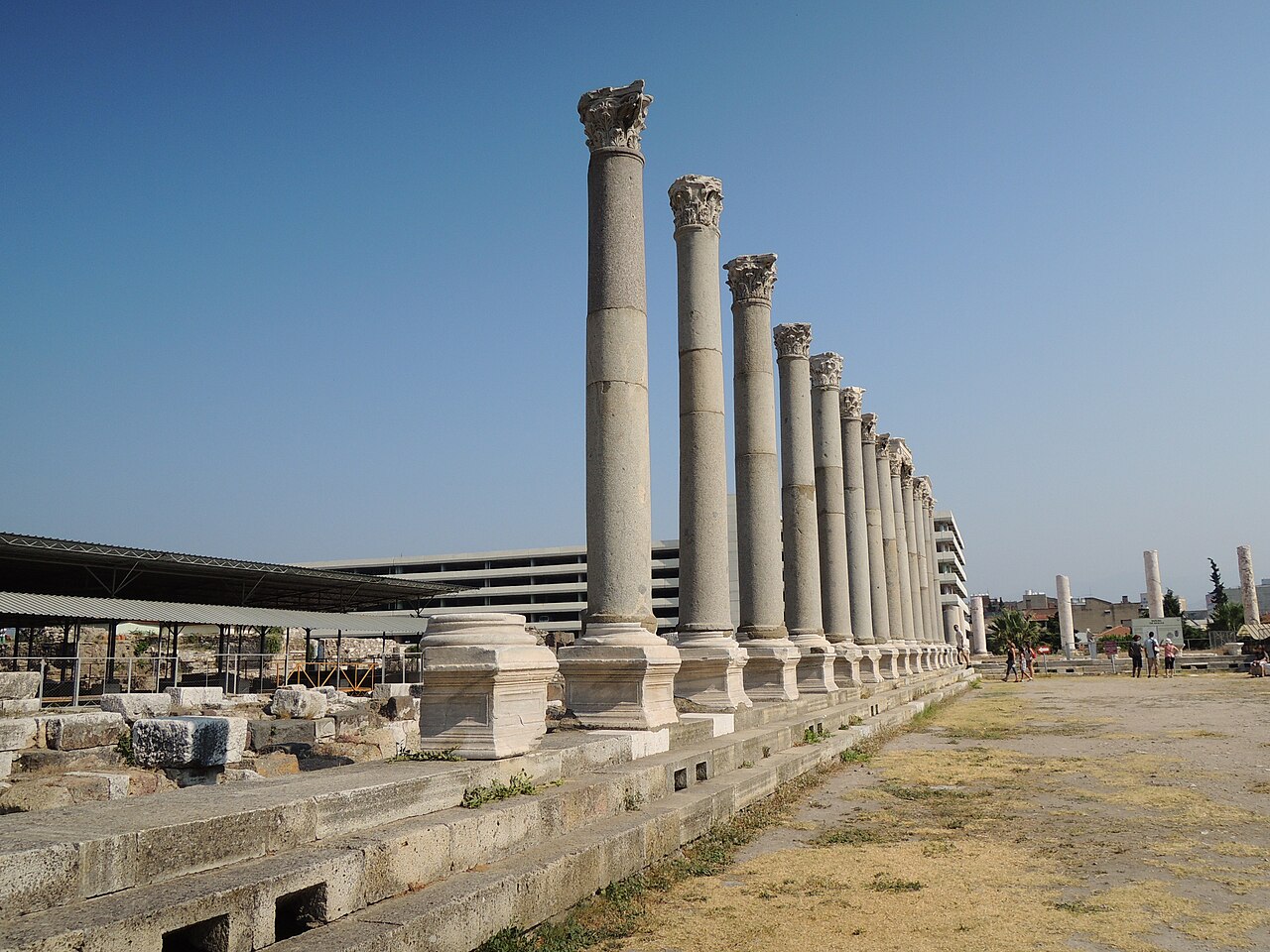
Revelation speaks to an early congregation in Smyrna. İzmir's excavated Agora reveals a later civic landscape, while the city around it has never stopped changing.
Begin in today's İzmir
Smyrna is not a vanished town waiting outside modern life. Its name belongs to the history of present-day İzmir, where traffic, homes and shops surround the ancient Agora. This is a valuable beginning for a Christian heritage journey. The letter in Revelation was addressed to people living in a city, not to stones awaiting future visitors. At the Agora, a group can see columns, a broad courtyard and the remains of public buildings, then look beyond the enclosure to the living streets. Such a setting encourages attention to continuity and change. It also prevents the easy mistake of treating every visible wall as a direct witness to the first followers of Christ.
The words addressed to Smyrna
Revelation 2:8–11 begins with an image of the one who died and came to life. The speaker says he knows the community's distress and poverty, yet calls it rich. The message anticipates suffering, asks its hearers not to fear and urges faithfulness. It ends with the promise of a crown of life and an invitation to hear what the Spirit says to the churches. The text does not give a congregation size, an address or a description of its worship building. Its language is pastoral and visionary, speaking to a community under pressure rather than drawing a plan of ancient Smyrna.
One sentence contains hostile language about a rival Jewish group. It reflects a particular ancient dispute in the text. It must not be turned into a judgement about Jewish neighbours today. A responsible reading can acknowledge the sharp rhetoric, discuss its historical setting and refuse its use as an excuse for antisemitism. That care belongs to an honest visit, especially when the group reads Scripture aloud in a shared public place.
What the Agora can show
The İzmir provincial culture directorate explains that an agora could serve civic, commercial, political and social purposes. It identifies the Agora on Namazgâh Street as the city's state agora, rather than simply a market. Its plan includes a central courtyard bordered by colonnaded galleries. The northern and western galleries rise over basement levels. Such architecture helps visitors picture a major urban centre with public activity and formal space. It does not locate the small Christian community addressed by Revelation. The excavation gives evidence for the city's built environment; the letter gives a voice directed to believers. They illuminate one another only when their different kinds of evidence are respected.
A date that changes the reading
The official description makes an especially important point about time. Although the Agora originated in the Hellenistic period, most surviving remains belong to rebuilding after an earthquake in AD 178, supported by Emperor Marcus Aurelius. That is later than the first-century setting usually associated with Revelation. The stones are therefore a powerful view of Roman Smyrna, but not a frozen picture of the moment when the letter was first heard. Restored or raised elements add another layer: modern conservation helps us read the place while making choices about what to show. A guide should explain the sequence rather than quietly folding two centuries into one scene.
A basilica is not automatically a church
In the Agora's northern wing, the local culture directorate describes a Roman civic basilica. The word can confuse visitors because it also appears in the names of later Christian churches. Here it refers to a public building associated with legal and commercial life, not to an identified first-century Christian sanctuary. Its impressive basement vaults and scale tell us about Roman construction and civic institutions. They do not prove that the congregation of Revelation met inside it. The distinction is simple but useful: the same architectural term may describe very different functions in different periods. Naming the function accurately gives the building its own story.
Many layers around one square
The directorate's account of Smyrna excavations describes work not only at the Agora but also at Kadifekale and the ancient theatre. It identifies layers extending through Hellenistic, Roman, Byzantine and later periods. Recent archaeological work has made additional spaces visible near the Agora, including a mosaic hall, council building and bath. None should be labelled the church of Revelation merely because it stands in a city named by the text. Each adds to the portrait of an inhabited place that was repaired and reshaped. Archaeology makes the city's long life tangible; it rarely assigns an individual biblical sentence to a particular surviving stone.
Where later memory belongs
Christian memory of Smyrna continued long after the New Testament period. Later stories, buildings and devotions can matter deeply to visitors, but they form their own chapters. A route should explain when a tradition is later, when a monument is securely dated and when the biblical text itself is silent. These distinctions do not diminish a pilgrimage. They make it more attentive. The same city can hold a first-century written witness, second-century rebuilding and centuries of subsequent Christian life. The aim is to let each witness speak in its own register, without asking the Agora to certify the experience of every early believer.
A thoughtful way to visit
Start with Revelation 2:8–11 before entering the Agora. Ask what the passage says about fear, endurance and hope, and what it leaves unsaid about buildings. Walk the courtyard and galleries, noting the public scale and the later rebuilding. Pause at the civic basilica to clarify its purpose. Then look toward the surrounding city: İzmir remains a lived-in place rather than an archaeological backdrop. Confirm opening conditions when planning a group, and leave time for questions and quiet reflection. Smyrna rewards a journey that brings Scripture and place together while keeping chronology, evidence and human dignity clearly in view.