
Pisidian Antioch: Paul's words and a church built later
The city near Yalvaç brings Acts 13 into conversation with Roman streets and the remains of a later church dedicated to Paul.
Two cities with the same name
The Antioch of Acts 13 is easy to confuse with the Antioch where Barnabas and Saul began their work. The sending community was in Antioch on the Orontes, at modern Antakya. After travelling through Cyprus and landing at Perga, the companions reached another city: Antioch in Pisidia, near today's Yalvaç. Keeping these places apart changes how an itinerary is read. The first is associated with a community that sent travellers; the second is the setting for a public address and an encounter with its residents. A group can use a map before arriving and follow the movement from the Mediterranean coast inland. The names are alike, but the landscapes and episodes are distinct.
Read the synagogue scene carefully
Acts says Paul and Barnabas entered the synagogue on the Sabbath. After readings from the Law and Prophets, its leaders invited a word of encouragement. Paul addressed Israelites and others who revered God, retelling the story of Israel before speaking about Jesus. The chapter gives a substantial account of the message and the responses that followed. It does not give the synagogue's street address, floor plan or surviving stones. This is a literary and religious account of a gathering, not an excavation report. Standing among the city's remains can make the narrative feel immediate, but the guide should not point to a later wall and call it the room where the speech was delivered.
A city that responds in different ways
The first gathering is only part of the account. Acts describes people asking to hear more on the following Sabbath. It then reports wider attention, disagreement and opposition. Paul and Barnabas speak of taking the message to Gentiles, and the chapter ends with their departure for Iconium. The text presents a city in conversation rather than a uniform audience. Visitors can ask how words travel through a community and why the same message can be received differently. A reflective visit should avoid reducing the people in the narrative to simple heroes and villains. The passage belongs to an ancient debate, and it deserves attentive reading with respect for the Jewish setting in which it begins.
What the ruins can show
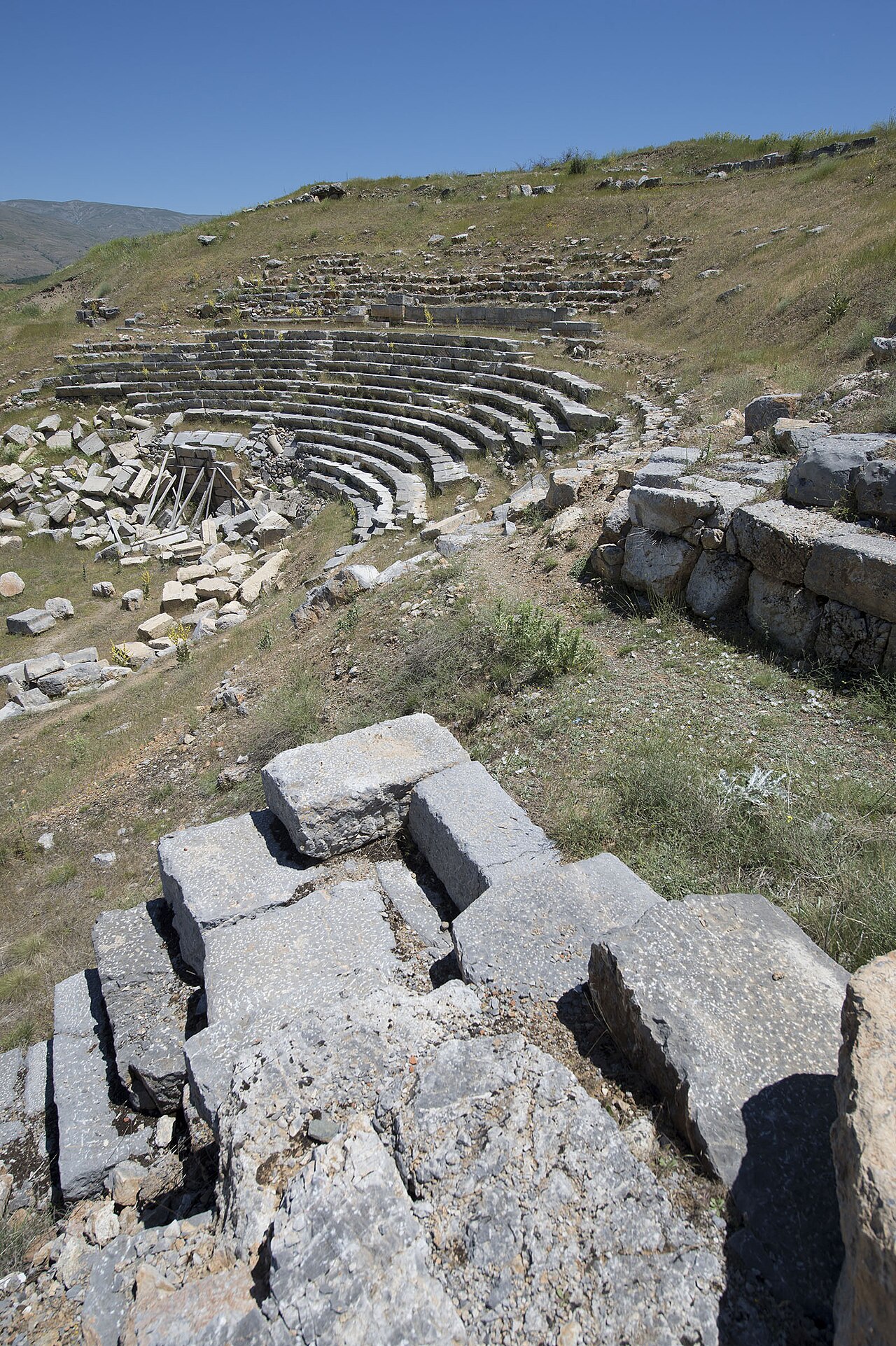
The archaeological area has remains from the city's Roman and later periods. Streets and civic spaces let a visitor consider the scale of the settlement and the built environment through which inhabitants moved. The Türkiye Ministry of Culture and Tourism's site guide identifies monuments and later Christian remains within the excavated city. These are valuable material witnesses to urban life, but they do not prove the details of every scene narrated in Acts. Archaeology can establish structures, phases and changes in use where evidence survives. The biblical text can identify the city as a setting for Paul and Barnabas. Reading both together is fruitful when neither is asked to answer a question outside its reach.
The church bearing Paul's name
Among the remains is a church associated with Saint Paul. The ministry's Isparta information places the church within the ancient city and explains its dedication by reference to Paul's visit. A provincial heritage brochure dates a church dedicated to him to the fourth century. That is several centuries later than the journey narrated in Acts 13. The dedication is evidence of later Christian memory and worship at Antioch, not the identification of the first-century synagogue. For a group, this chronological gap is worth stating before the visit. The later building is meaningful in its own right: it shows that communities continued to interpret the city's place in Christian history long after Paul had gone.
Return to the wider journey
Acts 14 describes Paul and Barnabas travelling through Pisidia again on their way toward Pamphylia and the coast. The chapter also speaks about strengthening communities along the route. A map can help connect Pisidian Antioch with Iconium, Lystra and Perga without implying that all modern road segments reproduce an ancient itinerary. Terrain, travel conditions and the order of visits matter when planning a real journey. Distances between sites deserve time, especially for groups that want moments of reading and reflection. The biblical narrative offers a sequence of places; a responsible contemporary tour must also account for present-day access, comfortable pacing and the needs of its travellers.
An encounter with Yalvaç today
The ancient site sits beside a living district, not in an empty biblical landscape. A visit can begin in Yalvaç and continue to the archaeological area, allowing travellers to notice both the historic remains and the life around them. Guides should use the local name as well as the ancient one and make room for the people who care for the site today. Conditions at archaeological places may change, so opening information and group arrangements should be checked before departure. When the weather allows, slow walking gives the setting time to register: the approach to the city, the open spaces and the church remains each invite a different question. None requires a claim that a precise speech can be located to a particular surviving stone.
Three kinds of evidence, one thoughtful visit
A useful way to close the visit is to name the sources separately. Acts 13 records a synagogue gathering, Paul's address and the city's varied response. The excavated remains document features of a city that endured through successive periods. The church dedicated to Paul belongs to a later Christian chapter, when his visit became part of local sacred memory. These layers are related, but they are not interchangeable. Invite a group to read the passage, observe what is actually visible and consider why later believers chose to honour Paul here. The result is a richer encounter with Pisidian Antioch: Scripture provides a story, archaeology grounds a place and tradition shows how the story continued to be remembered.