
The House of the Virgin Mary: Scripture, place and devotion
Near Ephesus, a place of prayer associated with Mary invites visitors to distinguish the Gospel's words from later tradition and the building they can see today.
Begin with a short Gospel passage
At the cross, the Gospel of John places Jesus' mother beside the disciple whom he loved. Jesus speaks to them, and the account says that from that hour the disciple took her into his home. It is a compact scene of relationship and care. The text does not name that home, describe its walls or say that Mary later travelled to Ephesus. These silences matter when visiting the sanctuary now called the House of the Virgin Mary. The Gospel provides a starting point for reflection, not a deed establishing ownership of a particular building near Selçuk. Read the passage slowly before reaching the site and let its words retain their own shape.
The setting above the ancient city
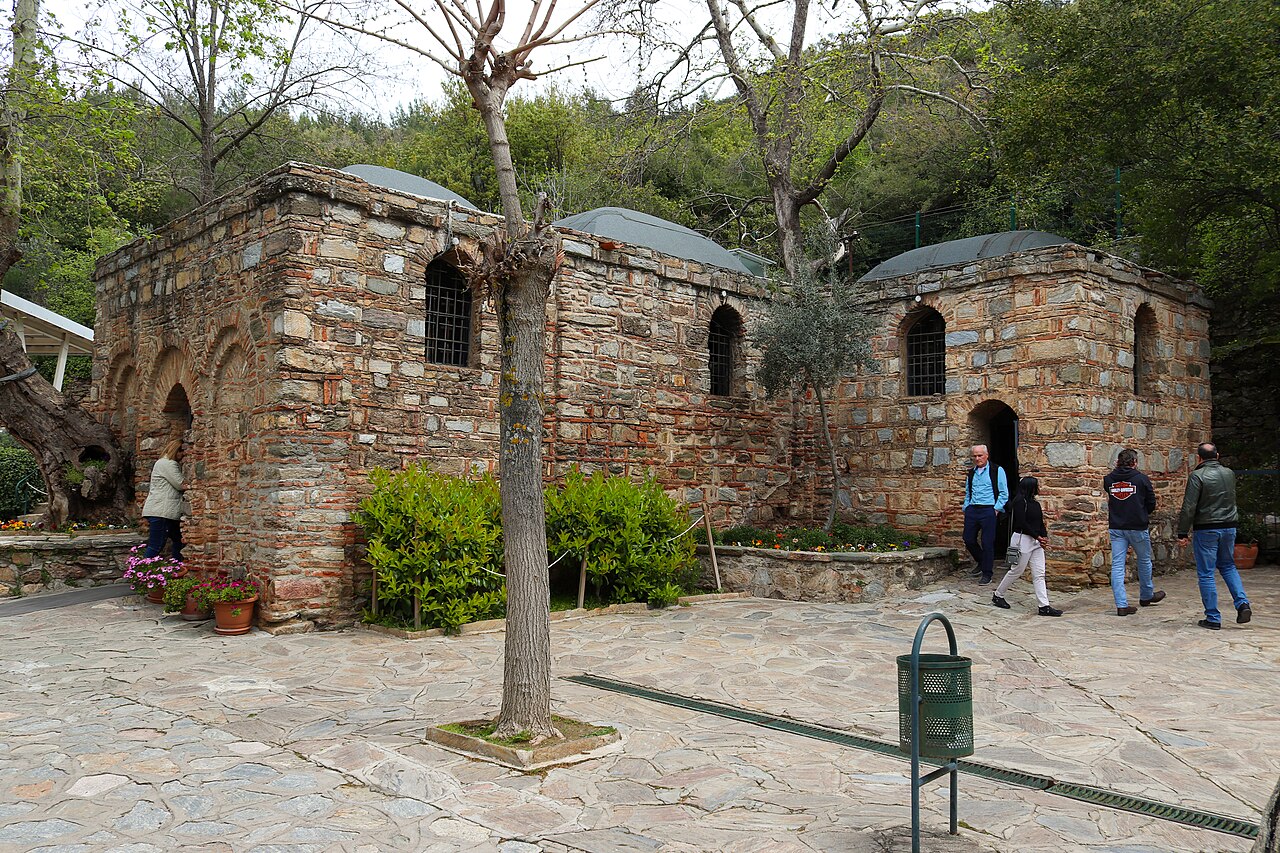
The house visited today stands in the wider Selçuk and Ephesus landscape. Official Turkish heritage material identifies it as a Christian pilgrimage place and includes it among the region's important religious sites. A journey can connect it with the ancient city and the later Christian monuments around Ayasuluk, while keeping their histories separate. The approach to the sanctuary changes the pace of a visit: traffic and monumental ruins give way to a quieter, wooded setting. That shift can help a group prepare for contemplation. Yet scenery alone cannot date a tradition. The hill, the building and the devotion attached to them should each be described for what the available evidence can support.
What tradition adds
A long Christian tradition associates Mary with the Ephesus area and identifies this sanctuary with the last period of her life. Tradition can carry profound meaning for pilgrims, and the site is visited with prayerful intent. It is also a different kind of source from the Gospel of John. John's account of the cross does not provide an itinerary from Jerusalem to Anatolia. Later believers connected Mary's care by the beloved disciple with the wider memory of John and Ephesus. A guide can explain that connection without converting it into a biblical quotation. Visitors deserve to know both why the place is cherished and where the surviving scriptural evidence ends.
A building with its own history
At the sanctuary, the physical structure becomes the focus of attention. Its stonework, prayer space and arrangements for visitors show a place maintained and used across later periods. They do not make the present walls a first-century domestic interior. Material remains must be interpreted through their construction and alteration, and the available official descriptions do not establish that Mary lived inside this exact structure. This distinction allows the building to be valued without assigning it a date that its fabric cannot demonstrate. Look at what is actually present, listen to the way the site is used today and resist the temptation to turn every stone into a witness to the Gospel scene.
Ephesus holds several Christian stories
The region is not defined by a single sacred location. The Ministry of Culture and Tourism describes the Ephesus heritage area as holding early Christian monuments as well as the House of the Virgin Mary, which remains a pilgrimage place. In the ancient city, visitors encounter streets and public buildings from Roman urban life. Elsewhere, later churches tell of communities that interpreted and preserved Christian memory. These places belong to different eras and answer different questions. A well-paced itinerary can visit them in sequence while explaining how a first-century city, later worship and present-day devotion came to share a landscape. The result is a fuller sense of place than one unbroken timeline would offer.
Respectful language for a mixed group
Groups arrive with different understandings of Mary, pilgrimage and sacred space. For some, this is a deeply devotional stop; for others, it is an encounter with the history of Christian tradition. A guide should make room for quiet prayer without assuming every traveller shares the same practice. Phrases such as 'traditionally associated with Mary' communicate the site's meaning while marking the status of the claim. 'John 19 describes Jesus entrusting his mother to the beloved disciple' accurately identifies the scriptural passage. 'The Gospel says this was her house' would go beyond the text. Careful wording is an act of hospitality because it gives every visitor a reliable account of what is known.
Planning the visit
Set aside enough time to approach the sanctuary without haste. Read John 19:25–27 beforehand, then allow a pause at the site for individual reflection. If a group includes several Christian traditions, invite a leader to explain the intended form of prayer and give others freedom to observe quietly. Check current access, opening conditions and any group arrangements before travelling; these can change. Keep the visit connected to the wider Ephesus itinerary but avoid rushing immediately from one monument to another. A short discussion afterward can ask what came from Scripture, what was seen at the building and what belongs to later remembrance. Such questions deepen rather than diminish a pilgrimage.
Three voices in one landscape
The Gospel, the sanctuary and its living tradition speak in different registers. John tells of care at the cross and a disciple receiving Mary into his home. The present site offers a tangible place of prayer near Ephesus. Christian tradition links that place with Mary's later life, a connection cherished by many visitors but not specified in the biblical passage. Archaeology and architectural observation can describe the visible setting without proving the entire tradition. Holding these voices together gives a group a more honest encounter. Travellers can honour the meaning of the sanctuary, appreciate the layers of the region and leave with a clearer sense of how Scripture, place and devotion continue to meet in Anatolia.