
Göreme beyond the frescoes: a landscape of shared life
The rock-cut churches draw the eye, but the rooms around them also tell a story of Christian community in Cappadocia.
Enter a whole landscape
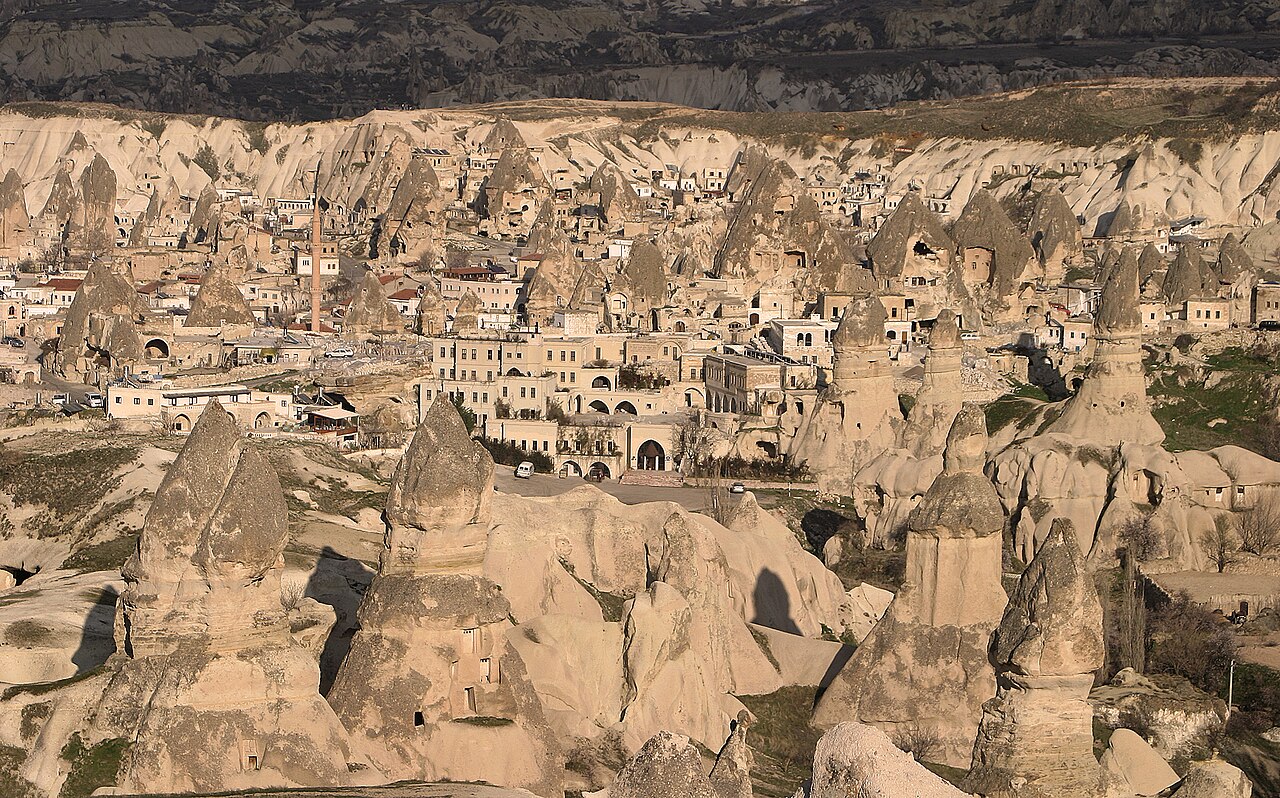
A visit to Göreme Open Air Museum often begins with a search for painted churches. Their surviving images deserve attention, yet the official museum description also names chapels, dining rooms and living spaces carved into the rock. Together they describe a setting where religious practice belonged to daily rhythms. The valley is more than a gallery of Christian art. Its paths connect spaces with different functions and invite travellers to think about the people who moved among them. Begin with the wider view before entering any single chamber. Notice how the rock has been shaped, how entrances face the open air and how close one space is to another. These observations help the site feel inhabited rather than displayed.
The museum's long chronology
Türkiye Museums describes intensive monastic life at Göreme from the fourth to the thirteenth centuries. That span is long enough for practices and buildings to change considerably. A room seen today should not be assumed to represent every century equally. UNESCO highlights Göreme's rock-hewn sanctuaries and the exceptional evidence they preserve for Byzantine art, especially in the period after Iconoclasm. These institutional descriptions support the importance of the site, but they also point to different kinds of evidence. A guide can introduce broad phases without assigning every doorway or colour to a precise year. The value of the place lies partly in the way successive generations left traces within one striking landscape.
Rooms made for more than worship
The museum lists refectories as well as churches and chapels. A refectory is a dining space, and its presence encourages a simple question: how did a community sustain its ordinary life? Food preparation, shared meals, rest and movement between rooms were all part of living in a religious settlement. The surviving openings cannot tell us the name or thoughts of each person who ate here. They can, however, prevent a narrow picture in which monastic life consisted only of formal prayer beneath painted ceilings. Looking at the rooms together suggests a pattern of work and fellowship. It also gives group leaders a chance to discuss how faith communities organize time, labour and hospitality without claiming that modern practice exactly recreates medieval Cappadocia.
A biblical text for reflection
Colossians 3:12–17 speaks of compassion, patience, forgiveness, gratitude and teaching through psalms, hymns and spiritual songs. It is a useful passage to read while considering shared Christian life. It does not describe Göreme, which belongs to a much later historical setting. The text can offer a theme for reflection, while the rock-cut rooms provide material evidence of later communities that lived and worshipped here. Keeping that distinction clear allows both sources to speak honestly. Ask participants what a community needs besides a place to gather. The passage answers in the language of relationships and worship; the site invites questions about space and routine. Neither supplies a complete reconstruction of the other.
Why the paintings still matter
Looking beyond the frescoes does not mean passing them by. UNESCO describes Göreme's painted sanctuaries as important evidence for Byzantine Christian art. Images of Christ and sacred stories offered visual language within spaces of worship. The museum notes that early geometric decoration can appear in initial paint layers, while later frescoes show scenes from the Bible and the life of Jesus. Such layers remind visitors that even a single church may contain more than one moment of use. Give each image time, but resist treating a painting as a photograph of an event that happened in the valley. It is a work of devotion made by a later community, with its own artistic choices and historical setting.
Listen to the architecture
The soft Cappadocian rock made excavation possible, yet each carved room required decisions about access, light and scale. Some spaces gather a group; others feel intimate. A small doorway can change the pace of entry, while a window frames the valley outside. Visitors may notice how quiet a chamber becomes after a busy path. These sensory impressions help explain why the landscape remains memorable, though they are not evidence of what a particular medieval person felt. A careful guide moves between observation and interpretation: here is an opening we can see, and here is one possible reason it mattered. That honesty is especially useful when a group includes travellers interested in faith, archaeology and design for different reasons.
Plan a considerate route
A group journey should allow time to look beyond the most famous church. Start with the valley as a whole, choose a small number of accessible interiors and leave room to compare their functions. Some chambers may be unavailable or subject to separate arrangements, so verify current museum conditions before travel. Avoid crowding a doorway during a long explanation; smaller groups and short pauses can make observation easier for everyone. In places where images are fragile, follow the site's photography and conservation rules. These practical choices support the monument rather than interrupting the experience. A slower visit often reveals more than a hurried attempt to enter every available room.
A community remembered in stone
Göreme can be approached through three distinct conversations. The museum and UNESCO explain the physical site and its historical significance. The paintings reveal later Christian artistic and devotional choices. Colossians offers an earlier biblical reflection on the qualities of communal life, without claiming to describe these particular rooms. Bring those conversations together at the end of a visit. What did the visible spaces make possible? What can their decoration tell us about worship, and what remains unknown about individual lives? The answers need not be complete. Churches, dining rooms and paths together suggest a community sustained by repeated practices over time. That broader view makes the valley's Christian heritage more human and gives its remarkable art a living context.