
Ephesus: where Scripture meets stone
A walk through Ephesus can bring Acts, Revelation and the later memory of the Church into conversation—without confusing one with another.
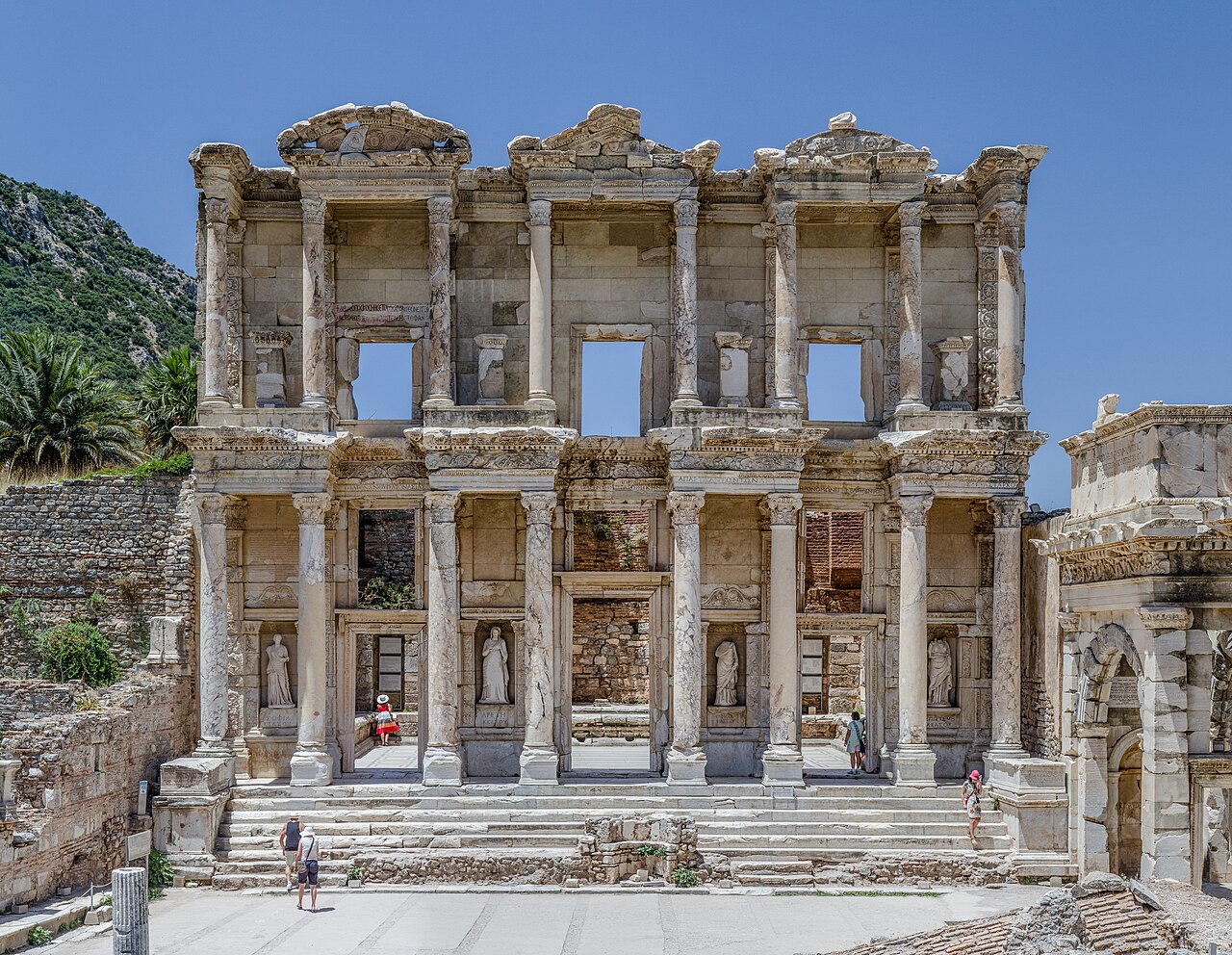
A city larger than one story
Ephesus is often introduced as a biblical destination, yet the city was never only a backdrop to a biblical episode. It was a major centre of Roman Asia, shaped by trade, civic ceremony and religious life. The remains visible today belong to many centuries, and some of the most familiar monuments were built or altered after the events described in the New Testament. That layered history is precisely what makes a thoughtful visit rewarding: the stones give scale and texture to the world in which early Christians lived, while the texts give questions to carry through the site.
Paul’s Ephesus in Acts
Acts 19 describes Paul arriving in Ephesus, meeting disciples and spending an extended period teaching. Luke places discussions first in the synagogue and later in the lecture hall of Tyrannus. The text also portrays a city in which the message spread beyond a single gathering: people heard it across the province, and its influence touched ordinary life. Walking through the archaeological site does not identify the exact room in which Paul taught. It can, however, make the scale of such a public city easier to imagine.
The chapter’s account of craftsmen concerned about the trade in Artemis shrines is especially revealing. For them, Paul’s preaching was not an abstract argument. It appeared to threaten work, status and a deeply rooted civic devotion. Acts culminates in a confused assembly in the theatre. Visitors can stand before the great theatre today, but should resist treating every surviving stone as an eyewitness to one precise moment. Archaeology and text speak to each other most honestly when we keep that distinction in view.
The theatre and the crowd
The theatre is one of Ephesus’s most memorable spaces because it makes the public nature of city life tangible. Rows of seating rise above the performance area, opening a view of how a crowd could gather, hear and react together. In Acts 19, the gathering is noisy and unsettled; the narrator says many people did not even know why they had assembled. That detail gives the episode a human immediacy often lost when it is reduced to a neat illustration of triumph or conflict.
A guide may read the passage near the theatre, then leave a moment of silence. The point is not to stage a reenactment. It is to notice the distance between a calm archaeological visit and a crowded ancient city, and to ask how convictions move through communities.
The letter to Ephesus
Ephesus appears again in Revelation 2, now as a community addressed by a letter. The message praises endurance and discernment, yet challenges the church over the love it had at first. This is a different kind of source from Acts. It offers a spiritual assessment, not a walking route through the city. Reading the two together can deepen a visit, provided we do not flatten their different purposes into a single historical scene.
The seven letters in Revelation speak to communities across Roman Asia. Their names correspond to real cities, though the phrase “Seven Churches” does not mean seven surviving church buildings waiting to be visited. At Ephesus, the question raised by the letter can still feel immediate: how does a community preserve both conviction and compassion over time? The ruins cannot answer it for us. They can create a place in which to ask it with greater attention.
John and the later Christian landscape
Christian memory of Ephesus extends beyond the New Testament. Near the ancient city, the Basilica of St John marks a place long associated by tradition with the apostle. The present ruins belong to a later period of Christian history. They do not turn the traditions surrounding John into archaeological certainty, but they show how generations of believers remembered, honoured and interpreted the past. That later history deserves its own voice in a pilgrimage, rather than being folded silently into the first century.
The wider Ephesus area also includes places connected in Christian tradition with Mary. Different visitors approach those traditions with different theological commitments. A good journey makes space for those differences while stating clearly what a biblical text says, what an ancient building demonstrates and what a later devotional tradition preserves. Such care makes the experience more welcoming and more truthful.
Walking with attention
A meaningful day in Ephesus need not be crowded with every possible stop. The site is expansive, its paving can be uneven, and the sun can be strong. Time to pause matters. Start with the city’s civic setting, give Acts 19 room near the theatre, and return to Revelation 2 as a question for reflection. If the route includes the Basilica of St John, approach it as a later chapter rather than the same scene. A guide can adjust the order to access conditions and the pace of a particular group.
Look at how the streets frame public life. Notice what survives and what is absent. Then allow the biblical passages to be read in full, not merely quoted as captions. The aim is not to make the stones say more than they can. It is to let place sharpen the reading and reading deepen attention to place.
A question to carry home
Perhaps the most valuable question from Revelation’s letter is also the most personal. What becomes of first love when a community grows older, more organised and more certain of itself? There is no answer carved into the marble of Ephesus. Yet walking the city with Acts and Revelation in mind can give that question room to breathe. The journey continues after the gate closes, in the practices of attention, endurance and care that travellers take home.