
Cappadocia’s painted churches: reading faith in stone
In Göreme, a remarkable landscape and centuries of Christian painting invite careful looking, unhurried reading and respect for different histories.
A landscape made and inhabited
Cappadocia's valleys first catch the eye through their shapes. Erosion worked on volcanic rock to form ridges, cones and sheltered hollows. People then made homes, workplaces and places of worship within that landscape. UNESCO recognises Göreme and the surrounding rock sites for both natural beauty and a remarkable record of human life. A carved opening is therefore never only a picturesque detail. It may belong to a long story of shelter, community, work or prayer.
The New Testament does not describe the painted churches visible in Göreme. Most of the decorated sanctuaries belong to much later Byzantine centuries. They matter deeply to Christian history, but in their own time and context. That distinction lets us appreciate them as the work of real communities rather than scenery for events they did not witness.
Why the walls were painted
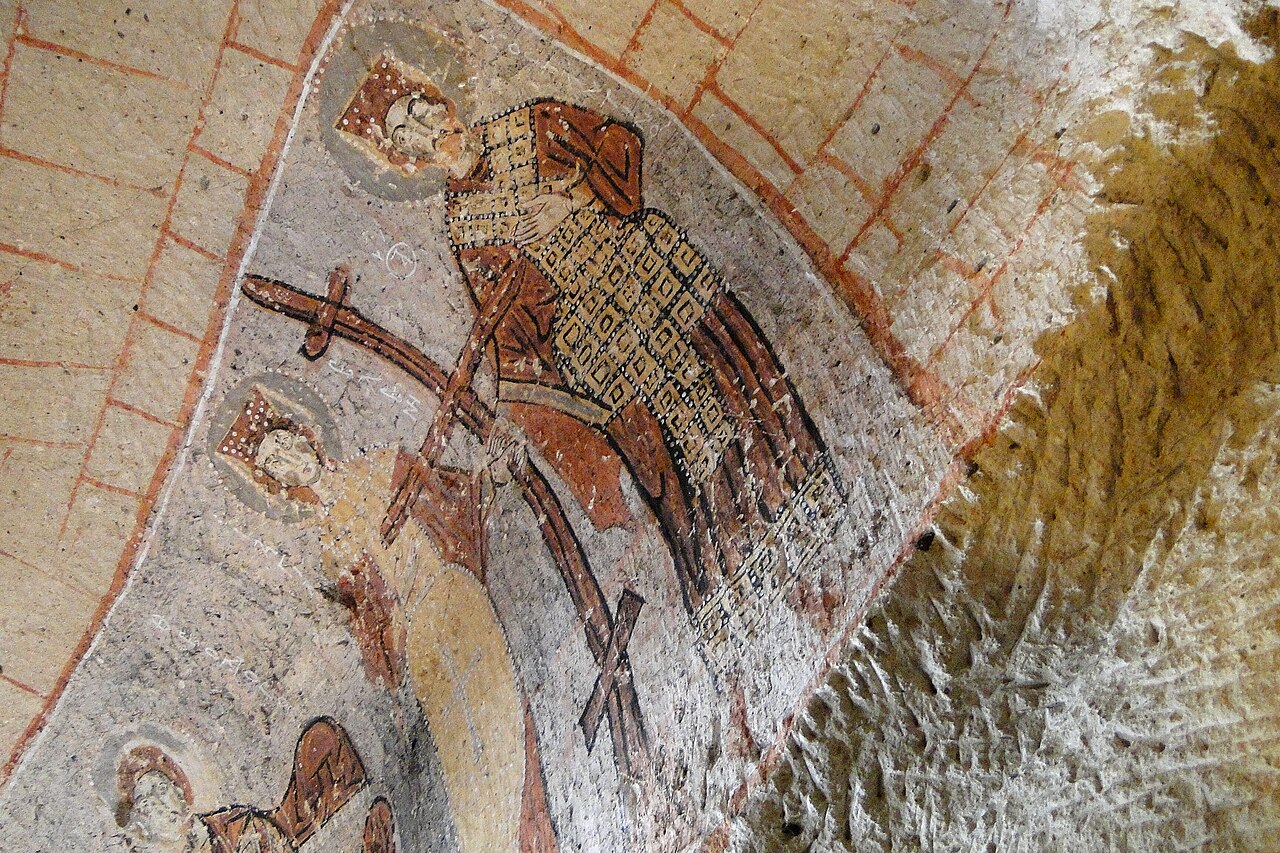
Inside a rock-cut church, paint changes the room. Faces, gestures and narrative scenes draw attention from the bare stone toward the worship and teaching that took place there. UNESCO highlights the Christian sanctuaries as exceptional evidence of Byzantine art after the period of iconoclasm. Some earlier spaces used restrained signs, including crosses; later churches received elaborate figurative cycles. The sequence was not uniform across every valley or century, so each room deserves to be read on its own terms.
A painting was never merely an illustration to fill a wall. Its placement could help a community remember stories and orient prayer. Today we enter as visitors, often briefly. Slowing down helps us notice that the images were part of lived religious practice before they became heritage objects. Yet seeing a scene does not tell us exactly how every person once understood it.
The Dark Church and surviving colour
The Turkish Ministry of Culture and Tourism describes the Dark Church at Göreme as a rock-cut building dating to the late eleventh or early twelfth century. Its small window admitted little light, helping its paintings retain vivid colours. The ministry lists scenes from the life of Jesus and other biblical subjects among its decoration. The surviving colour can feel startling because it resists the expectation that old places must be pale and silent.
That effect should not make us forget the material's vulnerability. Painted plaster, carved rock and the surrounding environment all require care. Visitors should follow current site rules and avoid touching surfaces or pressing through crowded interiors. Access arrangements can change; a thoughtful itinerary checks them rather than promising a particular room in advance. Time spent respecting a site is part of the experience, not an obstacle to it.
Scripture beside the images
A useful text to carry into Cappadocia is 1 Peter 2. It speaks of believers as living stones being built into a spiritual house. That passage did not describe Göreme's churches, and it should not be offered as their construction record. It offers a different kind of reflection: a community is made by people and their shared commitments, even when a building gives that community a visible home. The metaphor can be heard more sharply amid rooms literally shaped from rock.
Colossians 3 also describes a community marked by compassion, patience, forgiveness and songs of thanksgiving. Reading it beside a painted sanctuary can prompt questions about worship as a shared activity, rather than just an image on a wall. These biblical texts are sources for Christian thought. The churches are material evidence of later Christian lives. Bringing them into conversation is fruitful when their different dates and purposes remain clear.
What archaeology can and cannot say
The churches preserve architecture, decoration and traces of use. They show that Christian communities shaped this landscape over centuries. They do not identify the feelings of every worshipper or prove that a particular scene was understood in only one way. UNESCO's account places the wider rock landscape in a long history, while the museum's description gives details about one church. Neither source turns a later fresco into direct evidence for a first-century biblical event.
Cappadocia has underground settlements and traditions of refuge, yet individual spaces and episodes need careful dating. The most honest guide says what is known, what is plausible and what belongs to later memory. Such clarity leaves room for wonder without asking the rocks to support more than they can.
How to visit with attention
Begin outside, where the valleys show how closely settlement and geology belong together. Then enter a small number of churches rather than racing through every doorway. In each room, let your eyes adjust. Look first at the overall space, then at where an image sits and what other scenes surround it. A guide can explain the story represented while allowing a moment of quiet. The aim is not to collect as many photographs as possible.
Some interiors have restricted photography or special access conditions, and these should be checked at the time of travel. Uneven paths, steps and low light may affect a group's pace. An itinerary that includes rest and options for different mobility needs will be more generous to its travellers. It will also give the paintings the time they deserve.
A memory carried forward
The painted churches do not offer a direct window onto the first disciples. They offer something distinct: testimony to later Christians who carved space for worship and filled it with images of the faith they received. The natural forms around them, the architecture within and the surviving colour together show how a community can inhabit a place with meaning.
When the visit ends, the strongest memory may be a small detail rather than a sweeping view: a face emerging from dim light, a passage read slowly, or the silence after a group has left a room. Cappadocia rewards that kind of attention. Its churches invite us to look with care, separate the layers of history, and ask how communities keep their stories alive.