
Antioch and the cave of Saint Peter: reading a layered place
In Antakya, a rock-cut church invites a careful encounter with the community named in Acts and with centuries of Christian remembrance.
Begin with the city in Acts
Antioch enters the New Testament as a city of people, movement and conversation. Acts 11 describes believers dispersed after the persecution associated with Stephen. Some reached Antioch and spoke about Jesus to new audiences. News travelled to Jerusalem, and Barnabas came to see what was happening. He then went to Tarsus to seek Saul and brought him back. The two taught among the community for a year. The narrative says that the disciples were first called Christians in Antioch. It gives us a city and a developing fellowship, but it does not name a cave, street or surviving building where those meetings took place. That distinction should guide a visit from the outset.
A community larger than one monument
It is easy to let a memorable monument stand for an entire early church. Acts offers a more varied picture. Its Antioch community includes people who travelled from different places, hearers from different backgrounds and teachers working together. In Acts 11:27–30, the community also responds to a warning of famine by sending relief to believers in Judea. These details shift attention from a single room to relationships, teaching and practical care. A group can read the passage before entering the church and ask what kinds of action make a community visible. The text records those actions; it does not provide an archaeological plan of first-century Antioch. The surviving cityscape belongs to many later chapters.
The cave on the hillside
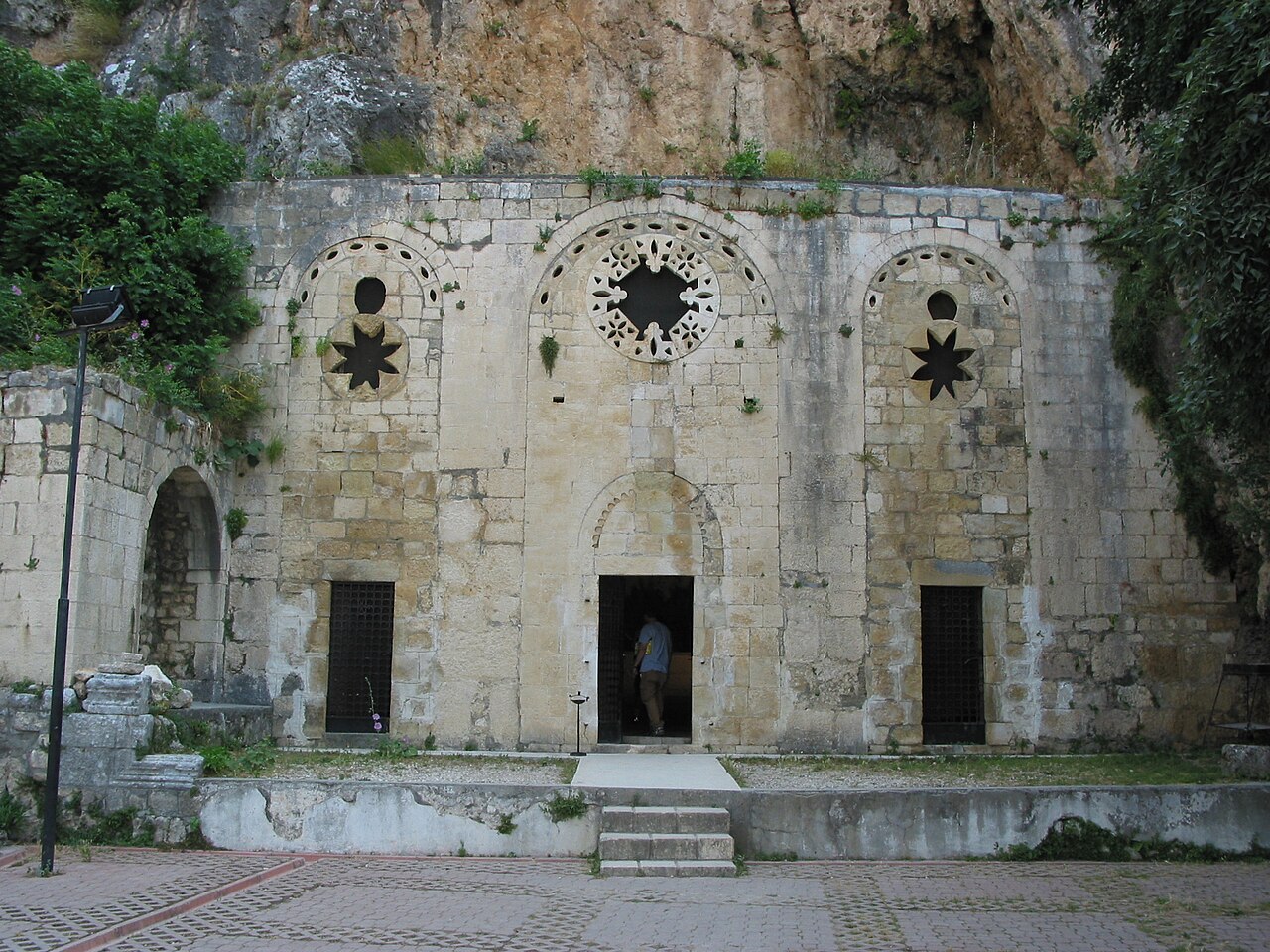
The site called Saint Pierre Church stands against the rock on a hillside in Antakya. The Hatay provincial cultural authority describes a natural cave adapted for Christian use and gives the chamber's approximate dimensions as thirteen metres deep, nine and a half metres wide and seven metres high. A visitor encounters stone, a shaped interior and the powerful experience of stepping out of daylight into a sheltered space. Those physical features are observable, while a precise date for the earliest Christian use remains less secure. Official descriptions also relay traditions that connect the cave with Peter and the first believers. Such traditions matter to the site's religious life, but they should be identified as tradition rather than presented as a direct statement in Acts.
What the name Saint Peter tells us
The church's dedication offers a way into the long memory of Antioch. Peter is a central figure in the earliest Christian story, and local devotion associates him with this cave. The New Testament passages that tell of the Antioch community do not locate Peter's preaching in the surviving chamber. Calling the place Saint Pierre Church therefore tells us how Christians have remembered and honoured an apostle at this location. It does not, by itself, establish the date of the cave's first adaptation or prove that a particular biblical conversation happened here. A thoughtful guide can hold both ideas together: respect the devotion attached to the site and keep the historical claim proportionate to the evidence.
Read the layers in front of you
A rock-cut setting can make an early date feel self-evident. Yet stone survives longer than the people who used it, and buildings acquire new forms. The official Saint Pierre material describes the cave church and its architectural development; the visible place reflects a history of alteration and continued attention. Rather than treating every surface as a witness to the first century, notice how people made a space for worship and how later generations kept it meaningful. Observe the transition between rock and built elements, the scale of the chamber and the way visitors move through it today. These are honest questions that the site can help answer. They also make room for archaeological interpretation without asking archaeology to certify every detail of a devotional story.
Antioch sends people onward
Acts 13 presents another moment in the life of the Antioch community. While its members worship and fast, Barnabas and Saul are set apart for work beyond the city. This passage connects Antioch to the journeys across the eastern Mediterranean and Anatolia that follow in the narrative. For travellers, it is a natural bridge between a visit to Antakya and a wider itinerary tracing Paul's movement. It is still important to keep the scale of the claim clear. Acts 13 describes a community commissioning two people; it does not tell us that the ceremony occurred inside the cave now called Saint Pierre. The link is geographical and thematic, not an identification of a specific room.
A visit shaped by listening
A group visit works best when it leaves space between reading and explanation. Read Acts 11:19–30 in a quiet place, then invite participants to identify the words that describe the community. At the cave, ask what can be seen and what comes from later accounts. Share the site's association with Peter as a living tradition, and explain why its earliest phases are not dated by the New Testament. Some visitors will approach the place as pilgrims; others will be interested in architecture or the history of Antakya. Both can be welcomed with accurate language. Before planning a journey, check current access arrangements with the relevant museum authority, since opening conditions may change. A slower visit can respect the site and the city around it.
Why the distinctions enrich the journey
Scripture, material remains and inherited devotion each illuminate a different part of Antioch's Christian heritage. Acts tells of a community that taught, gave aid and sent Barnabas and Saul onward. The cave church offers a tangible place shaped by worship and preservation. Tradition connects that place with Peter and invites reflection on generations who came to remember him. None of these sources needs to impersonate another. When a guide explains what each one can and cannot establish, the visit becomes more substantial. Travellers can encounter the biblical narrative, look carefully at the building and recognise the meaning it carries today. Antioch then emerges as a living city with layered histories, rather than a single frozen scene from the first century.